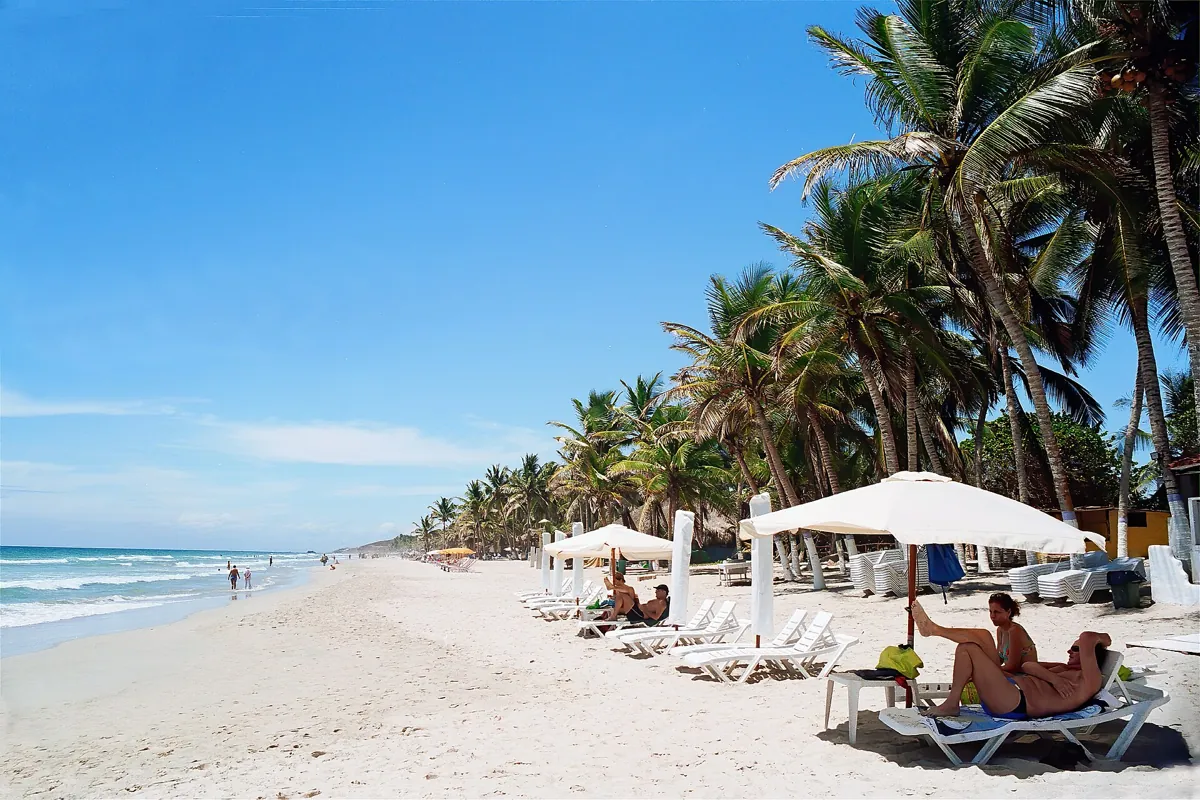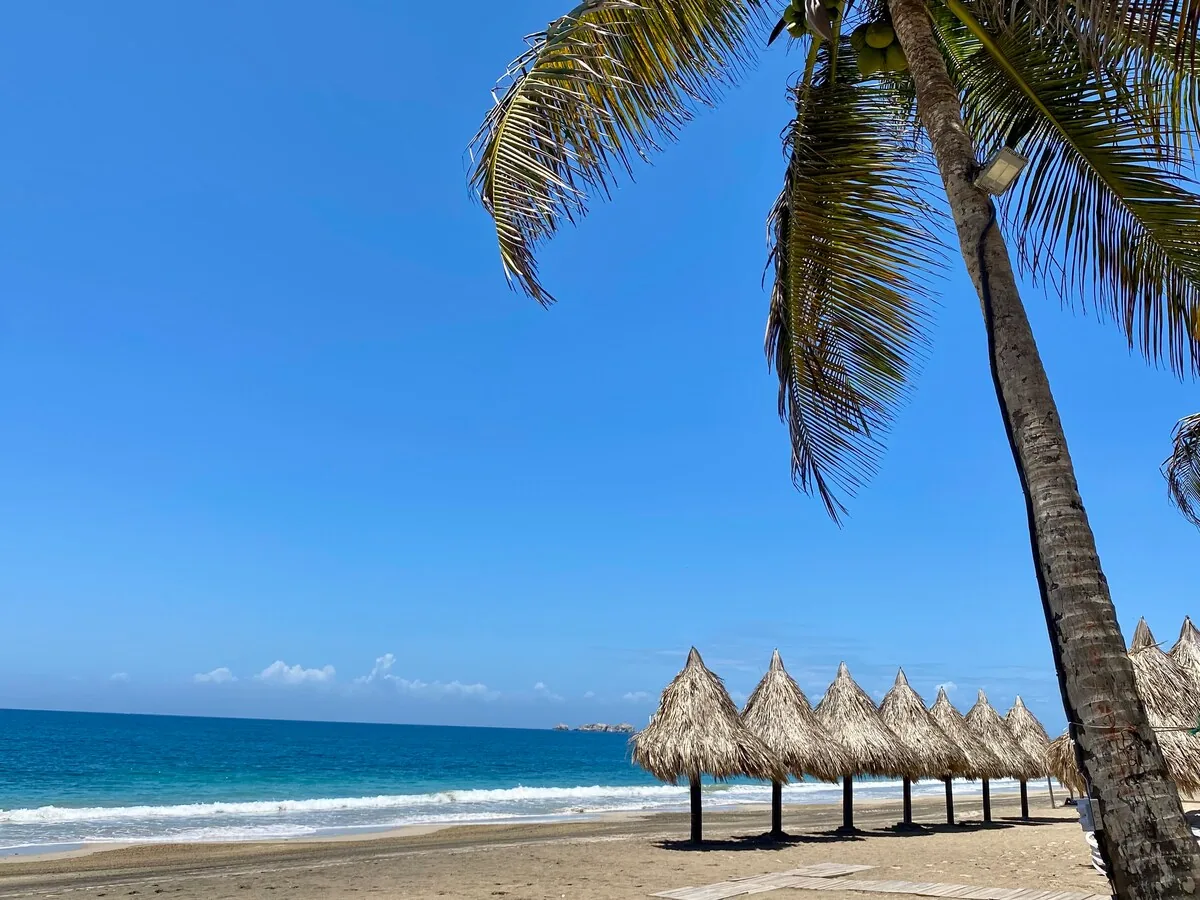
Beach with palm-leaf shades and turquoise water on Margarita Island
Here are the essentials for travelling to Margarita Island, Venezuela. You arrive by plane at Santiago Mariño International Airport or by ferry from Puerto La Cruz or Cumaná. In practice, most payments are made in US dollars, in cash. It's warm all year, and the easiest way to get around is by rental car. A week is ideal to combine beaches and day trips.
These are the questions our guests ask most before arriving at our apartment in Pampatar, so we've put them all in one place.
How to get to Margarita Island
By plane
The island's airport is Santiago Mariño Caribbean International Airport (PMV), in the south, about 12 km from Porlamar and next to El Yaque beach. Pampatar is roughly 30–40 minutes away by car.
- From Panama: Copa Airlines launches direct flights from Panama City to Margarita on 26 November 2026, three times a week (Tuesday, Thursday and Sunday). Panama connects you to many cities in the Americas and Europe.
- From Colombia: Wingo operates seasonal flights from Bogotá and Medellín.
- From the Caribbean: there are routes to Barbados and to Port of Spain (Trinidad and Tobago).
- From within Venezuela: direct flights from Caracas and cities such as Valencia, Maracaibo, Barquisimeto and Puerto Ordaz, with airlines including Conviasa, Avior, Laser, Rutaca, Estelar and Turpial.
Routes and schedules change often, so always check with the airline before booking.
By ferry from the mainland
Ferries arrive at the port of Punta de Piedras, on the west of the island, from Puerto La Cruz and Cumaná. The crossing takes 2 to 4.5 hours depending on the boat. It's the best option if you want to bring a car. Book ahead in high season.
Money: what currency to bring
In Margarita, as in much of Venezuela, US dollars in cash are widely used. Bolívars are mostly paid by Venezuelan card or pago móvil (mobile bank transfer).
- Bring small bills ($1, $5, $10 and $20). Change for large notes is hard to get at beach stalls, kiosks and taxis.
- Always ask how you can pay before ordering, especially at the beach, on boats and in taxis.
- Check restaurant bills: many already include a service charge.
- Don't rely on foreign cards: in many places they don't work or carry a surcharge.
When to visit Margarita Island
Margarita is warm all year, with daytime temperatures around 30 °C (86 °F) and little rain. The island also lies outside the usual hurricane path.
| Season | What it's like |
|---|---|
| January to April | Dry and sunny. Carnival and Easter week are high season. |
| May to July | Quiet, with good prices. A great time to go. |
| August | Venezuelan school holidays: busier, with higher prices. |
| September | 8 September is the feast of the Virgen del Valle, patron saint of eastern Venezuela, and many pilgrims arrive. |
| October to December | Some showers are possible. December is high season. |
Our tip: if you can choose, go from May to July or from mid-September to early December. It's quieter, the beaches are emptier and prices are better.
How many days to stay
- 4 or 5 days: the most famous beaches, Pampatar and La Restinga.
- One week: ideal. Time for beaches, day trips and rest.
- Two weeks or more: to explore at a slower pace, work remotely or settle in for a long stay. The apartment offers a 10% discount on weekly and monthly stays.
A 7-day Margarita Island itinerary
- Day 1: arrive and stroll around Pampatar at sunset.
- Day 2: Playa El Agua and Parguito.
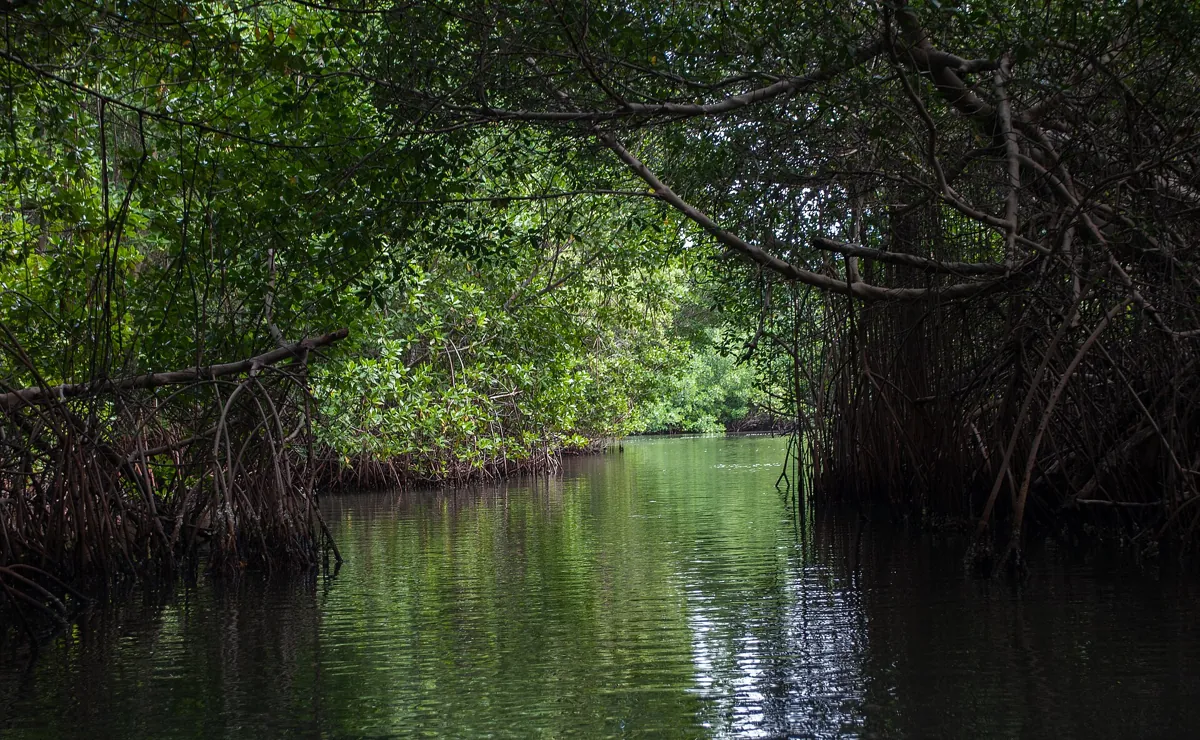
- Day 3: boat tour through La Restinga and an afternoon in Punta Arenas.
- Day 4: boat trip to Coche or Cubagua island.
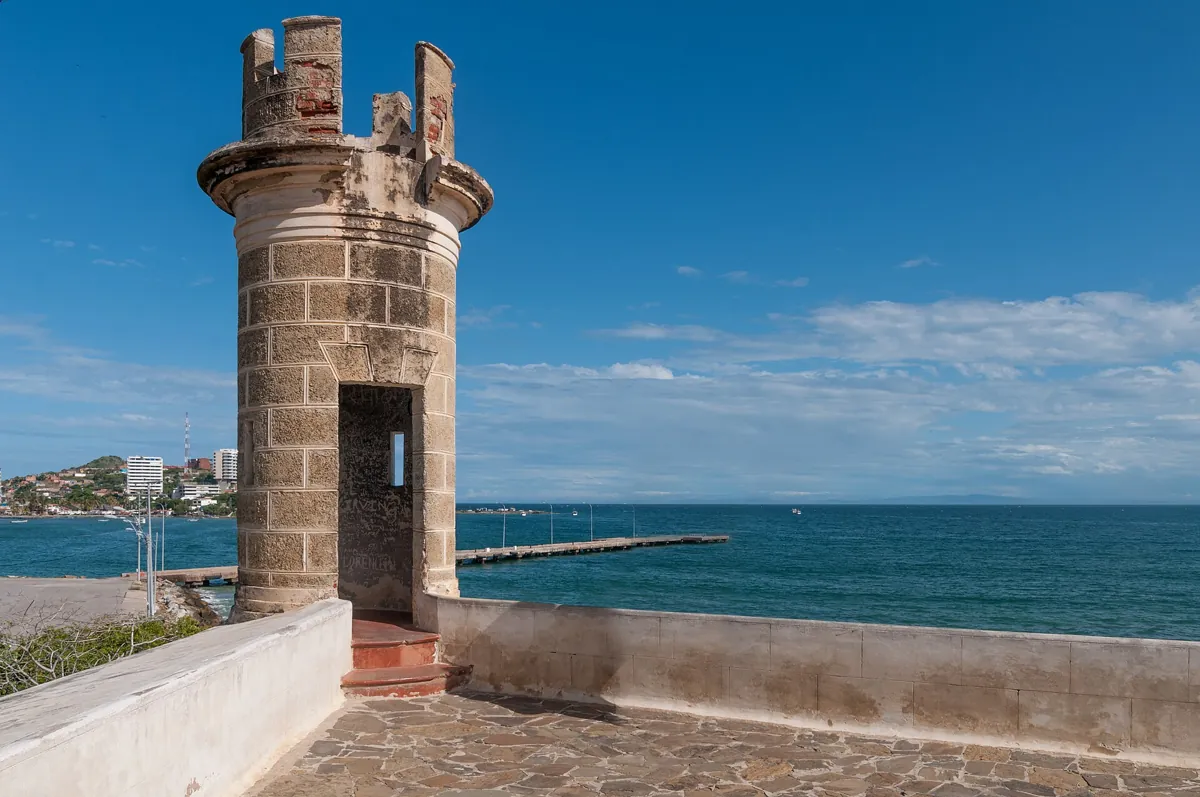
- Day 5: La Asunción and Juan Griego, with sunset at Fortín La Galera.
- Day 6: Guacuco or El Yaque, depending on whether you want calm or wind.
- Day 7: a morning at the pool or on the beach in Pampatar before you leave.
To choose a beach each day, see our guide to the best beaches on Margarita Island.
Getting around the island
Margarita is small: you can drive across it in under an hour.
- Rental car: the most convenient way to explore beaches and towns at your own pace. Book ahead in high season.
- Taxi: there are plenty, but they rarely use meters. Agree on the price before you get in.
- Por puesto: shared minibuses and cars on fixed routes between towns. The local, budget option, though slower.
The apartment includes free parking in the building's garage.
Electricity, internet and phones
- Plugs: Venezuela uses 120 V with flat-pin plugs, as in the United States. Visitors from Europe or the UK need an adapter.
- Internet: the apartment has wifi and a workspace set up for remote work.
- Mobile: for longer stays you can buy a local SIM card. The main carriers are Movistar, Digitel and Movilnet.
Health and safety
- Travel with insurance that covers medical care.
- Drink bottled water.
- Protect yourself from the sun: high-factor sunscreen, a hat and plenty of water, even on cloudy days.
- Use common sense, as anywhere: don't leave valuables in sight in the car or on the beach, and take a taxi at night.
- Before you travel, check Venezuela's entry requirements for your nationality and your government's travel advice.
What to pack
- Sunscreen, after-sun and mosquito repellent.
- Light clothing and a thin jacket for air conditioning and flights.
- Swimsuit, sandals and walking shoes.
- Sunglasses and a hat.
- A waterproof phone pouch for boat trips.
- A plug adapter if your devices don't use flat pins.
- US dollars in cash, in small bills.
No need to bring beach towels or an umbrella: the apartment has beach towels, chairs and an umbrella.
Working remotely from Margarita
If you're coming to work remotely, the apartment has wifi and a private workspace with an ergonomic chair, a laptop stand and a surge protector. Margarita is on Venezuelan time (UTC−4), which makes it easy to work with the Americas and with European afternoons.
Check-in and check-out
- Check-in: from 4 pm.
- Check-out: by 10 am.
- If you arrive early or leave late, you can store your luggage.
Any questions? Message us on WhatsApp using the green button and we'll help you plan your trip.
Frequently asked questions
What currency is used on Margarita Island?
In practice, most payments are made in US dollars in cash. Bolívars are paid by Venezuelan card or pago móvil. Bring small bills.
How do you get to Margarita Island?
By plane to Santiago Mariño Caribbean International Airport, with flights from Caracas and other Venezuelan cities and some international routes, such as Copa's direct flight from Panama from 26 November 2026. Or by ferry from Puerto La Cruz or Cumaná to Punta de Piedras.
When is the best time to visit Margarita Island?
You can go all year. The quietest times with the best prices are May to July and mid-September to early December. December, Carnival, Easter week and August are high season.
How many days do you need on Margarita Island?
A week is ideal to combine beaches, the La Restinga boat tour, a trip to Coche or Cubagua and the route through La Asunción and Juan Griego.
Do you need a car on Margarita Island?
It's not essential, but it's the most convenient. You can also use taxis, agreeing the price before you get in, or por puesto shared minibuses.
What plugs are used on Margarita Island?
120 V with flat-pin plugs, as in the United States. Visitors from Europe or the UK need an adapter.
Beachfront apartment with pool and free parking. ★ 5.0 on Airbnb.